Amaranthaceae: Goosefoot Family — others beside Saltbush (Atriplex) and similar species
The Goosefoot family (formerly called Chenopodiaceae) will not win any beauty prizes. The flowers are in small globular clumps, having no petals but with 5 sepals. Leaves are simple, sometimes fleshy or reduced to scales. Some plants in this family are cultivated for human food, examples are Chard, Spinach, Beets, Lamb’s Quarters and Quinoa.
California Goosefoot – Blitum californicum
Blooms:
Mar–Sept
Plant Height:
20–90 cm
Flower Size:
Small cluster
Origin:
Native
Habitat:
Dryish open sites, many communities
Notes:
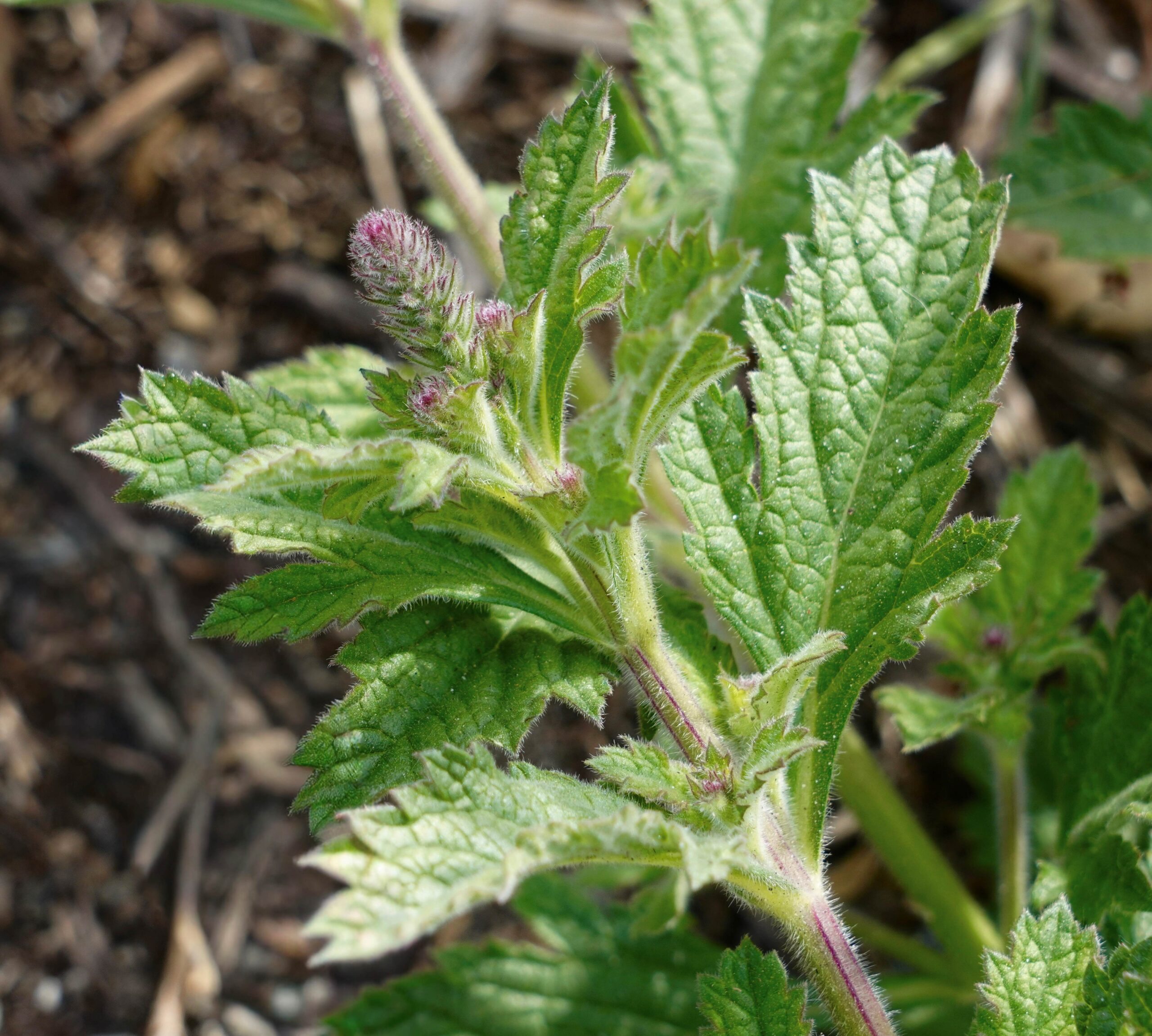
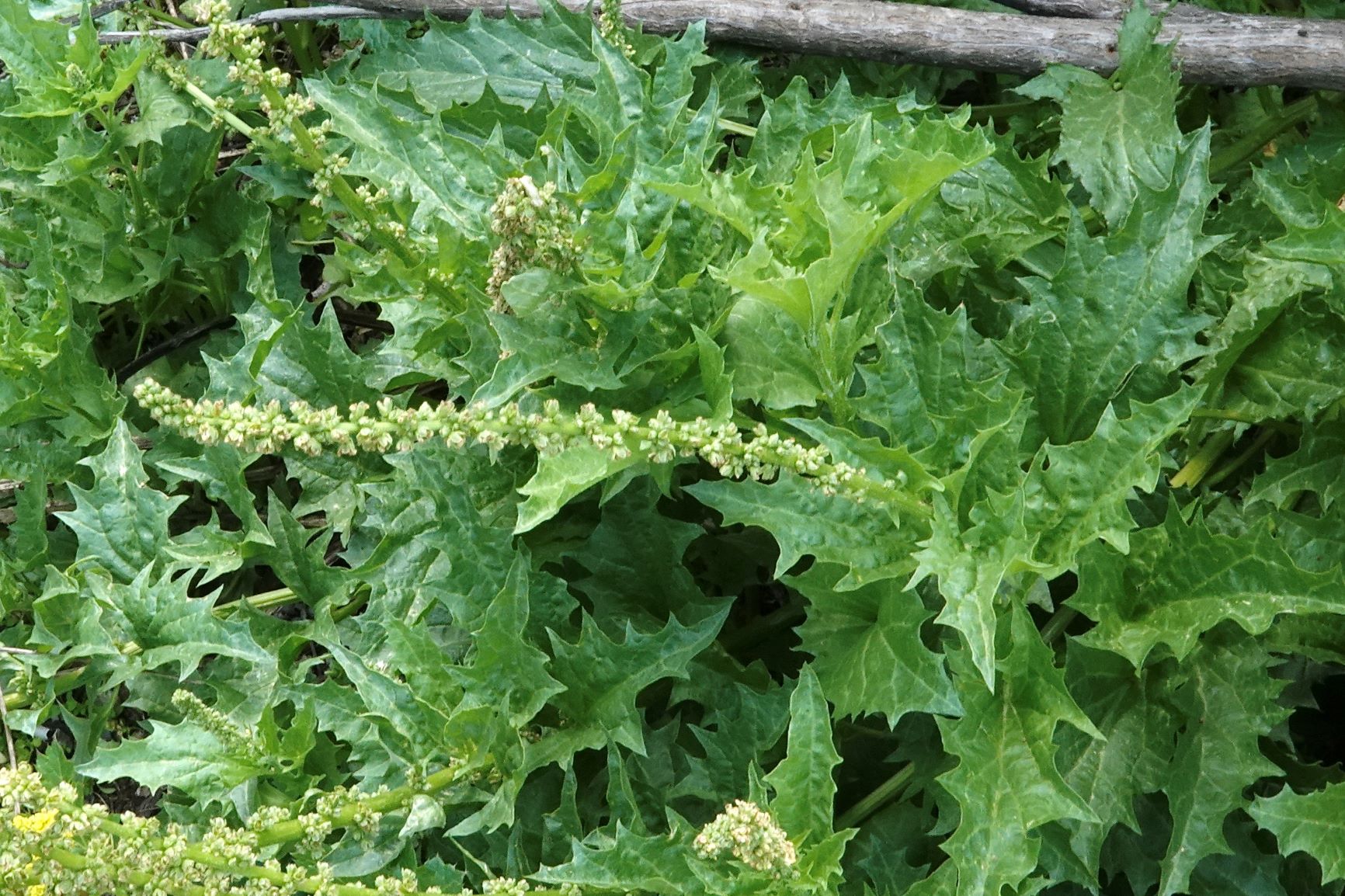
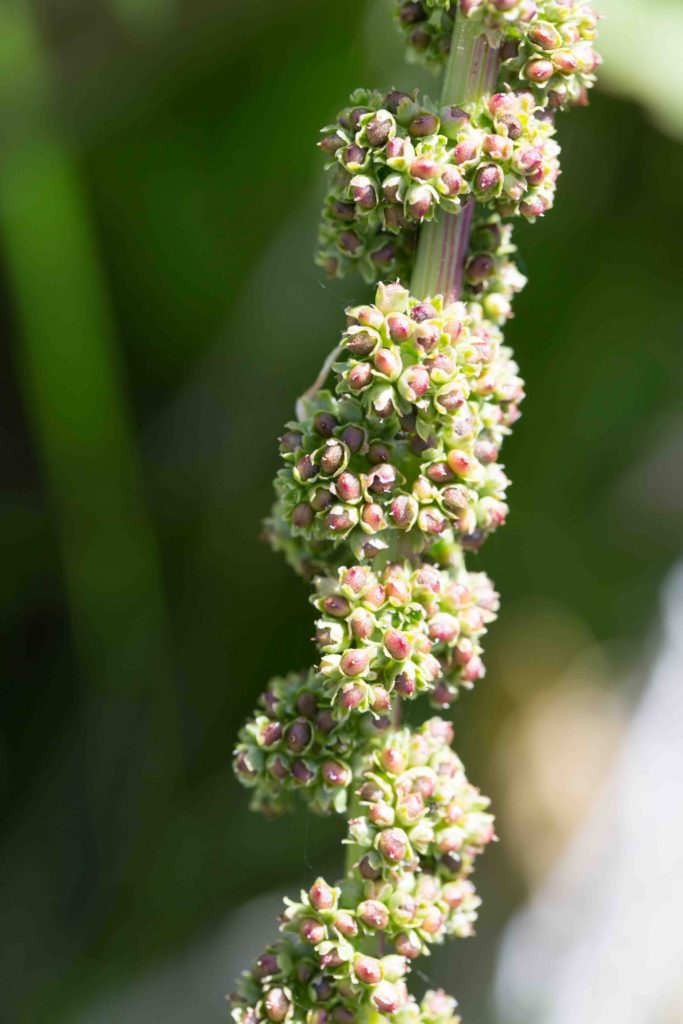
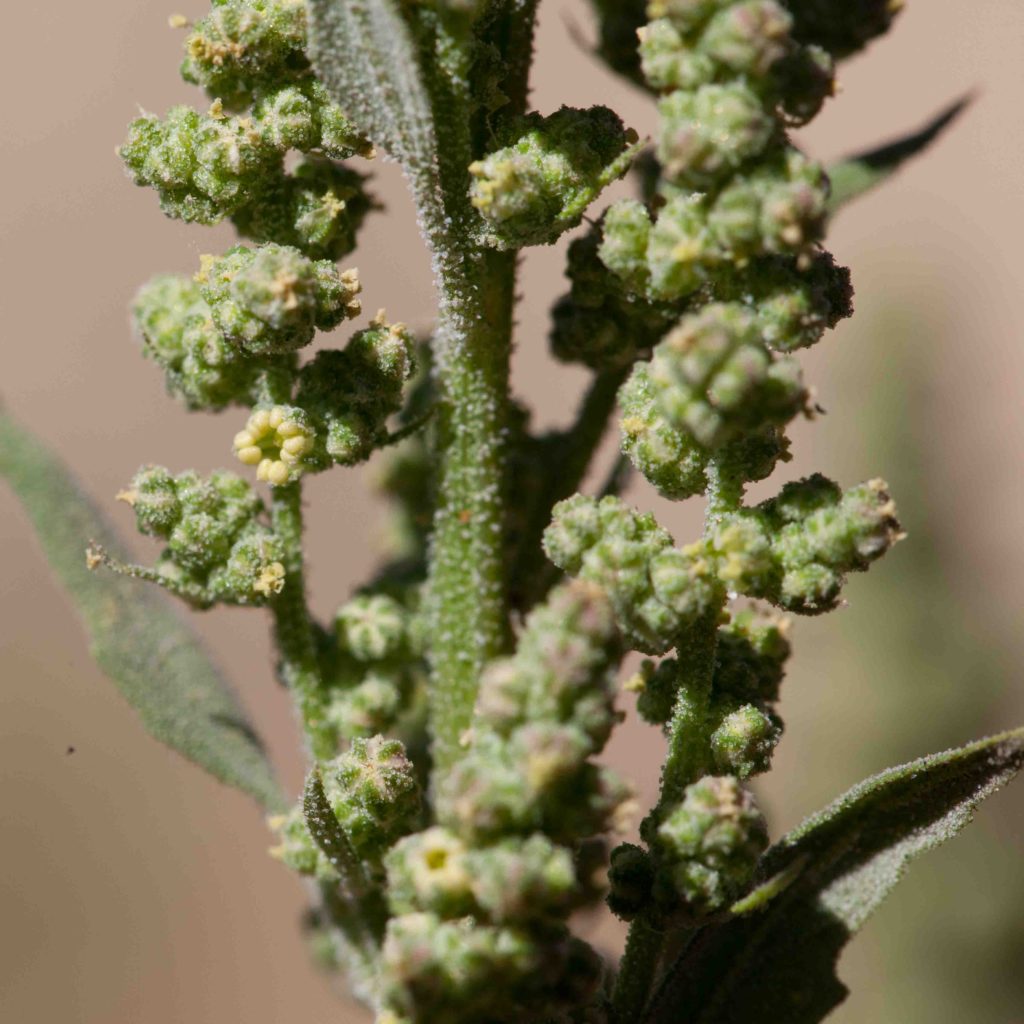
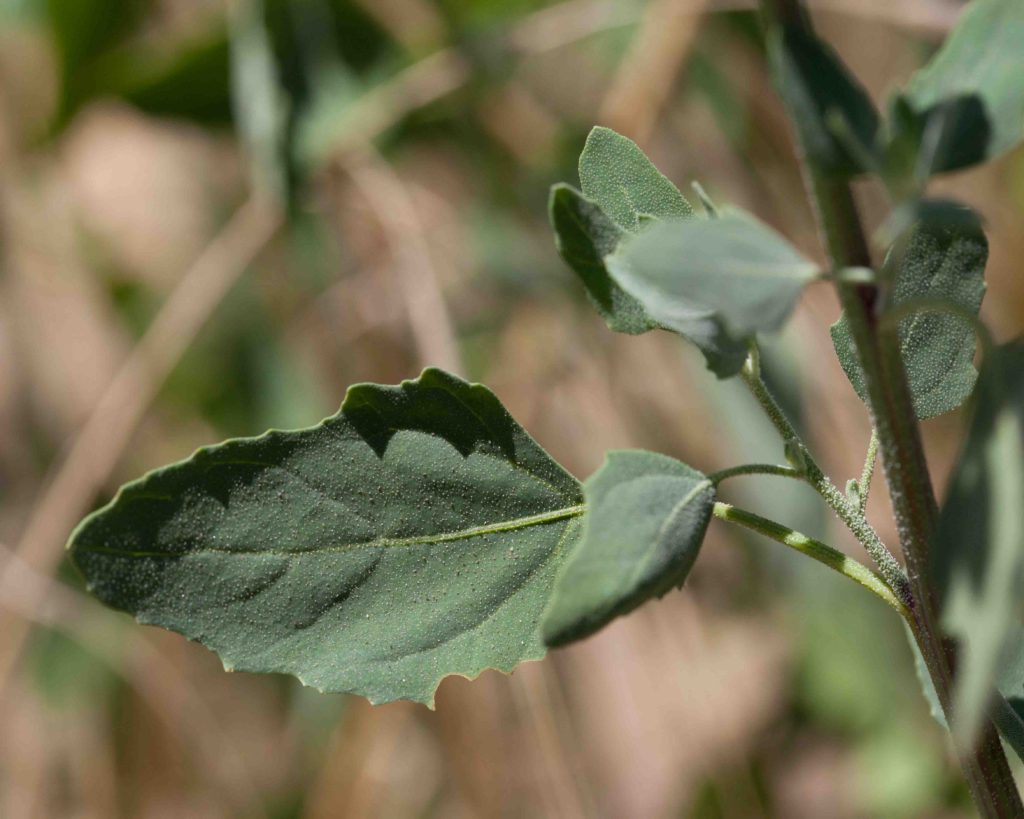
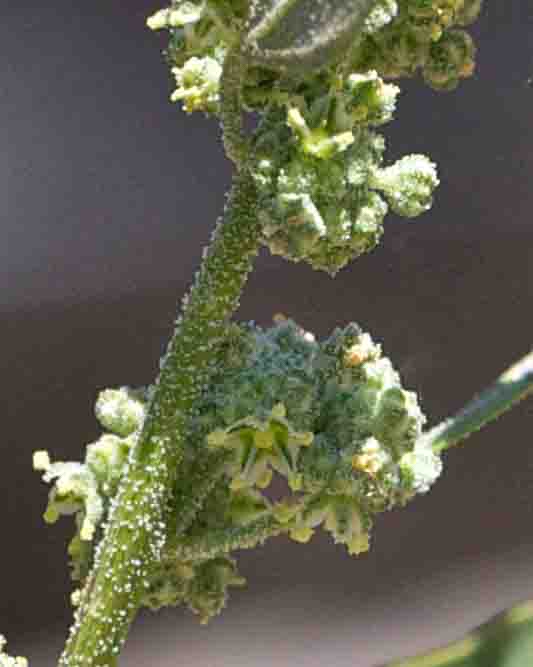
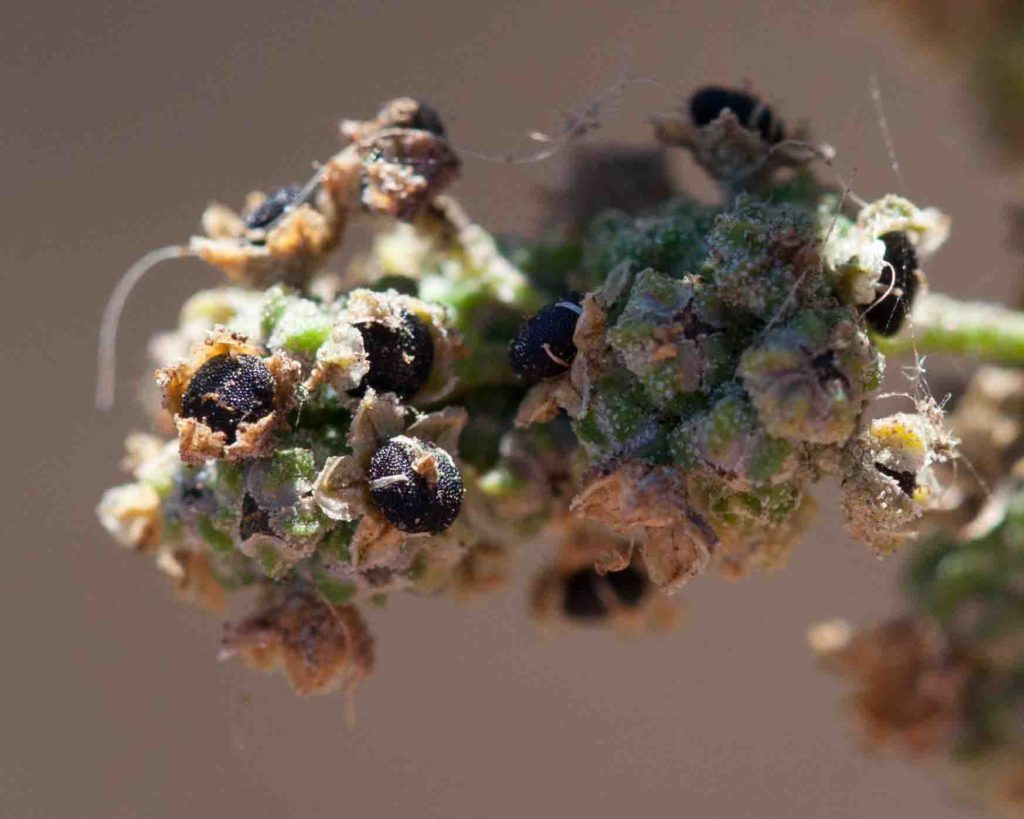
Common and easily recognized by its large, coarsely toothed, nettle-like leaves, and its long flower spike (up to 20 cm). Spherical clusters of tiny flowers mature into reddish fruits, and finally black seeds. Photos #1, 2 and 4 by CJH.

Nettle-leaved / Wall Goosefoot – Chenopodiastrum murale
Blooms:
June–Oct
Plant Height:
15–50 cm
Flower Size:
Small cluster
Origin:
Europe
Habitat:
Disturbed areas & fields
Notes:
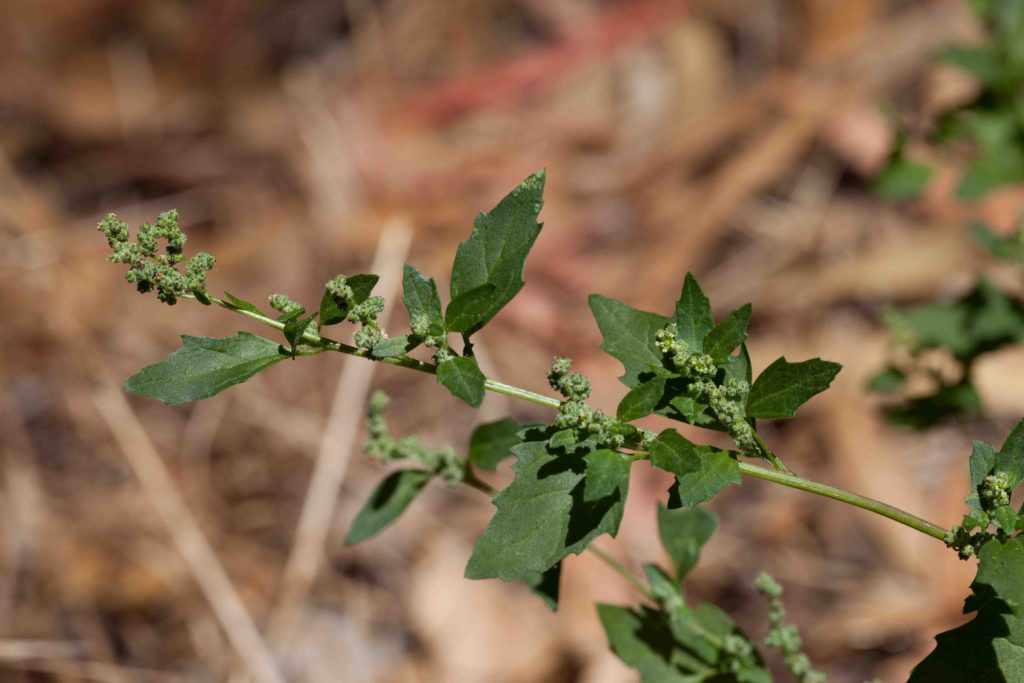
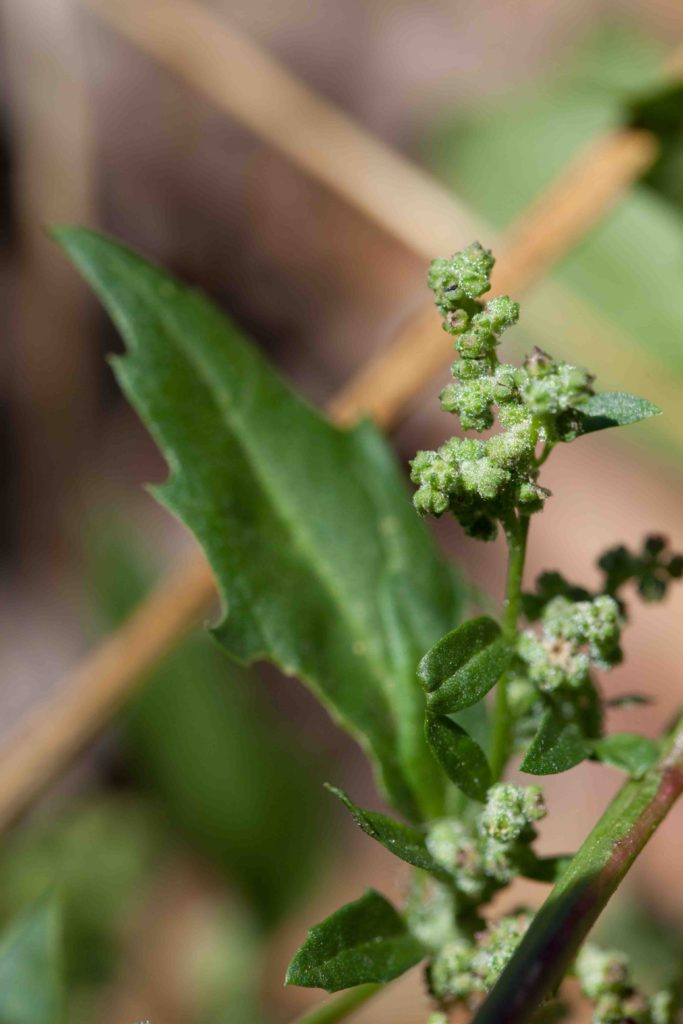
A smallish, spreading plant, branching from its base. Leaves are 8–40 mm, toothed, ovate to deltate, shiny and dark green above. Flowers and fruits are in small terminal or axillary clusters.
Lamb’s Quarters – Chenopodium album
Blooms:
June–Oct
Plant Height:
18–100 cm
Flower Size:
Small cluster
Origin:
Europe
Habitat:
Disturbed areas & fields
Notes:
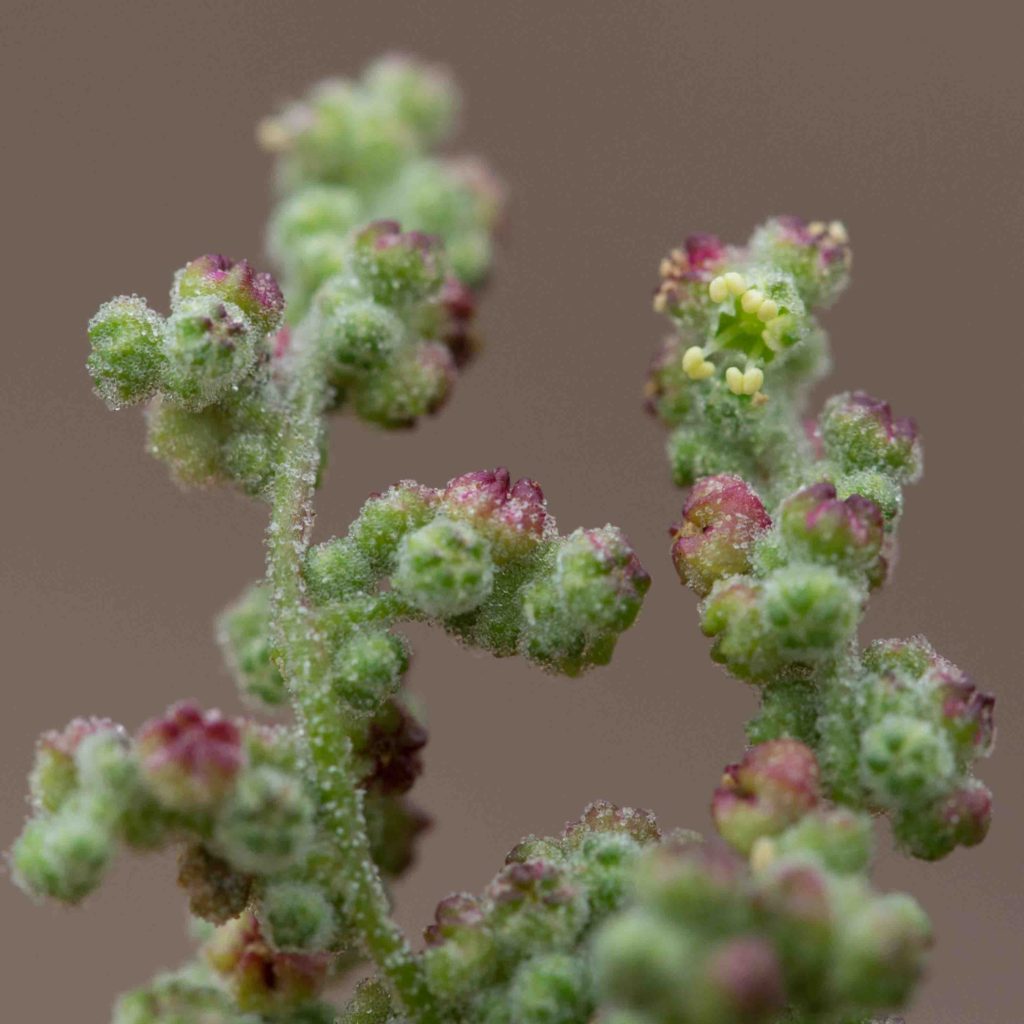
At first sight this might be mistaken for a Mugwort (Artemisia douglasiana) or a dock, but the tight powdery clusters of flowers/fruits (typical of goosefoots) with tiny greenish-yellow flowers are distinctive. Leaves are 25-–70 mm long, dull green above, lanceolate and slightly dentate. This species is notoriously variable in appearance.
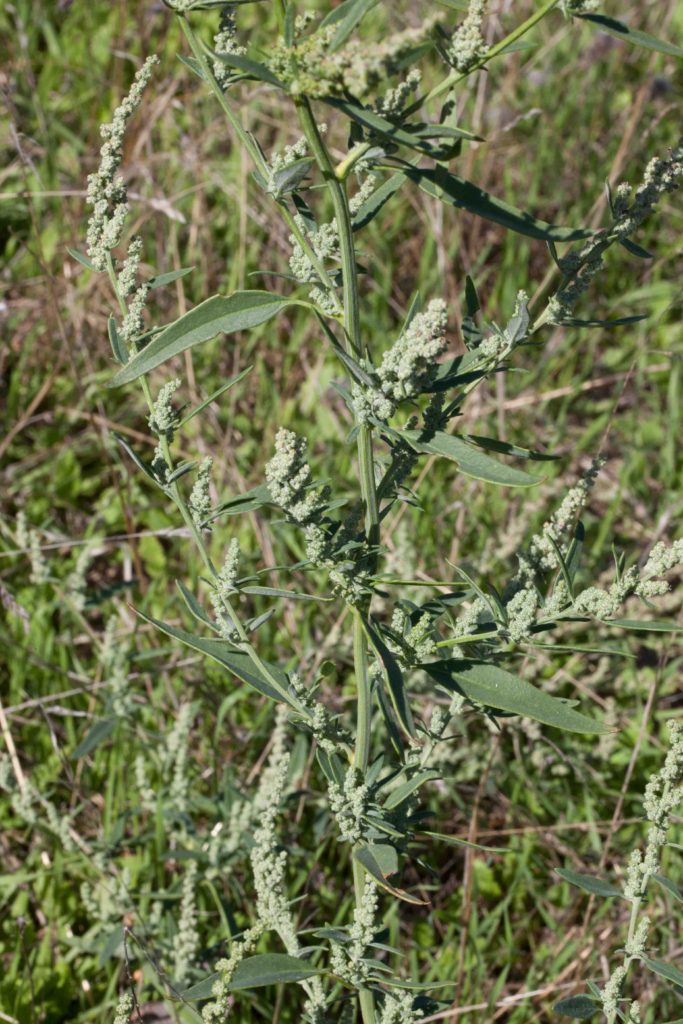
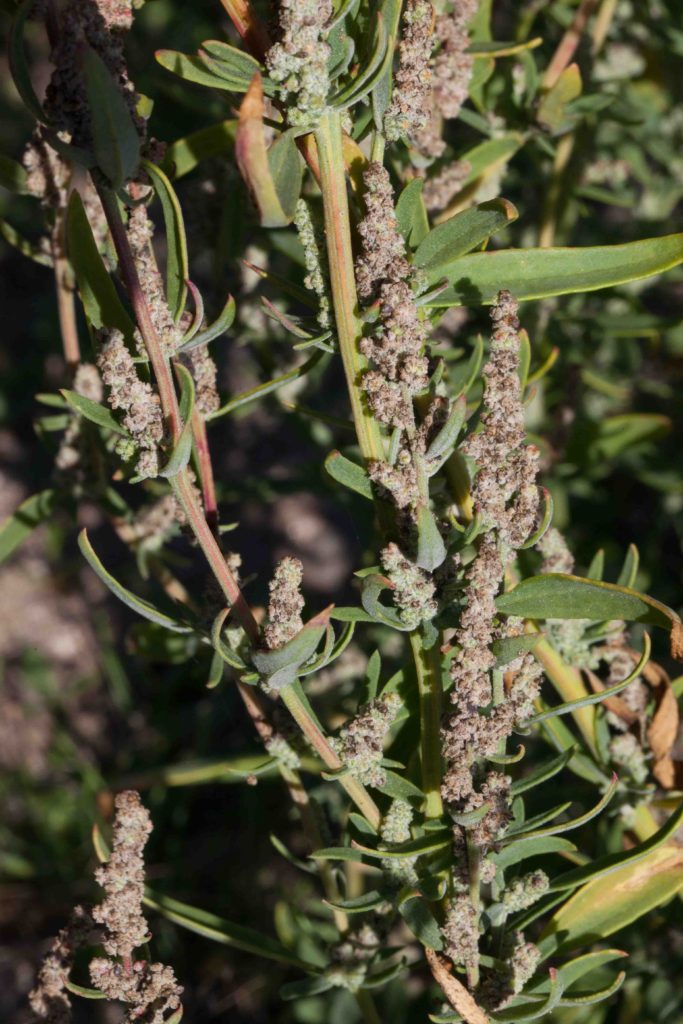
Narrow-leaved Goosefoot – Chenopodium pratericola
Blooms:
June–Sept
Plant Height:
16–65 cm
Flower Size:
Small cluster
Origin:
Native
Habitat:
Open, dry places
Notes:
Generally erect, either simple or branched. Leaves are 3–5 times as long as they are wide, elliptic to narrowly lanceolate. The leaves are 1- or 3-veined, entire or 1–2-lobed at their base. Flowers and fruits are in small terminal or axillary clusters.

Coast Goosefoot – Oxybasis macrosperma
Blooms:
July–Oct
Plant Height:
8–60 cm
Flower Size:
Small cluster
Origin:
South America
Habitat:
Moist places near coast
Notes:
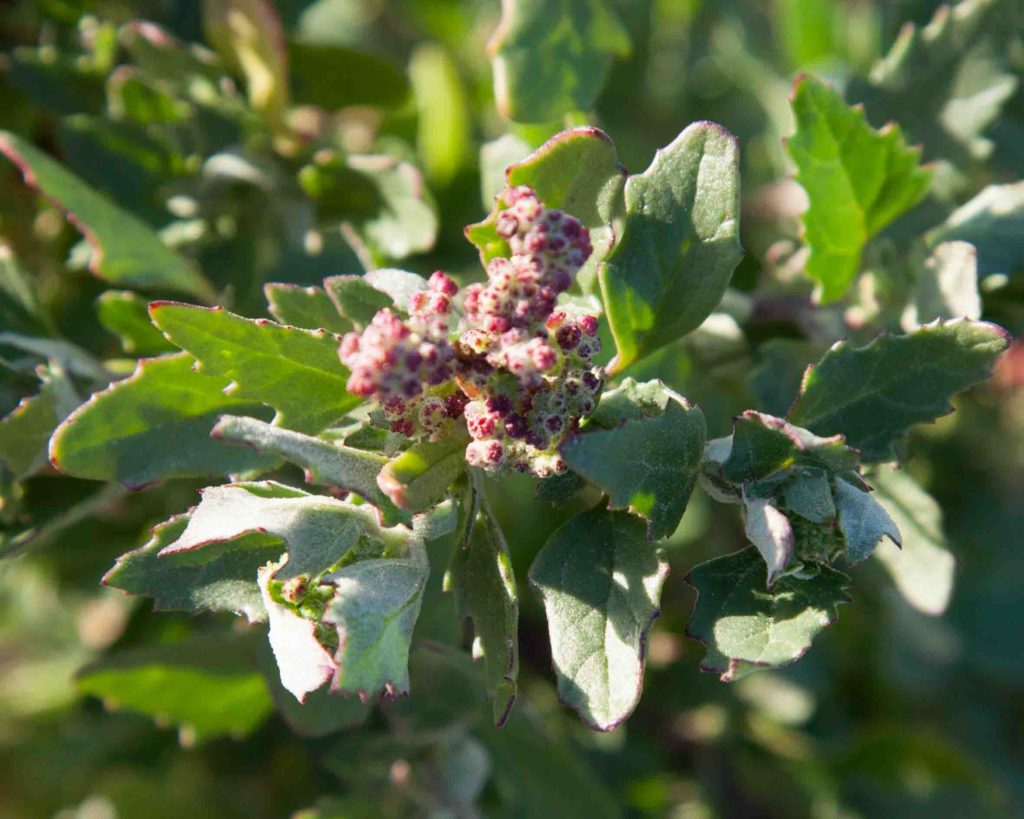
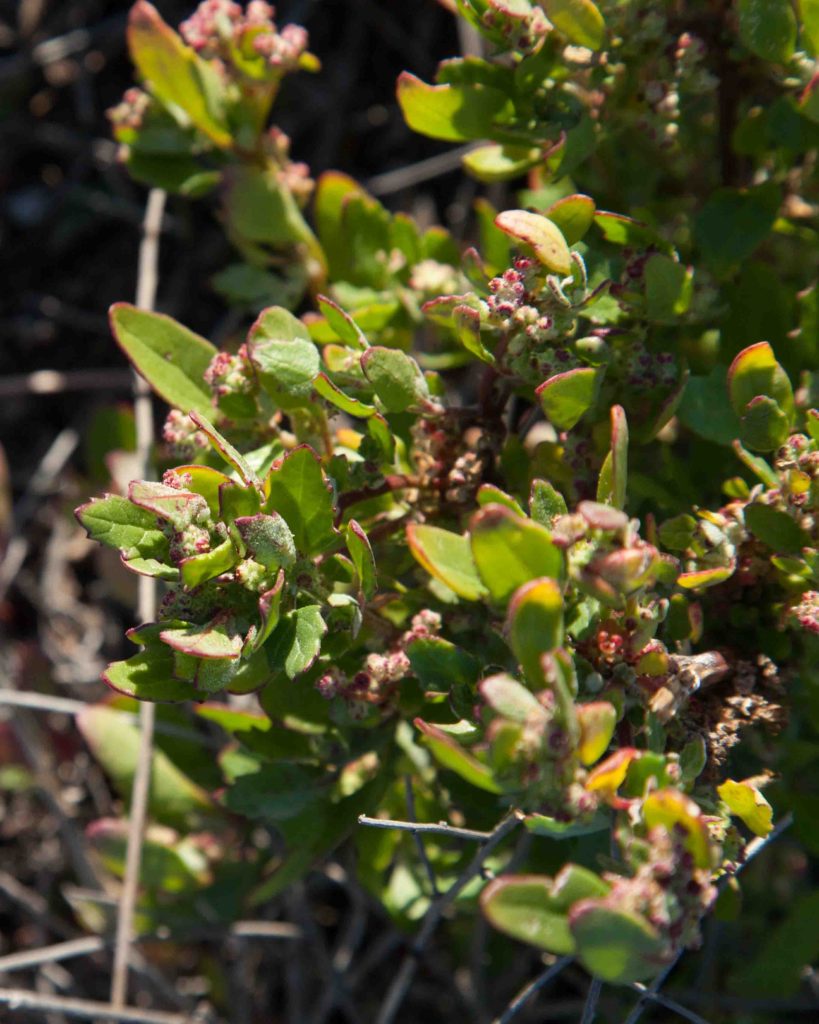
This has stout, reddish stems which branch from the base. The lower branches are decumbent, the upper ones ascending. Leaves are diamond-shaped to deltate with serrated margins, powdery below. Clusters of flowers are in terminal or axillary spikes.

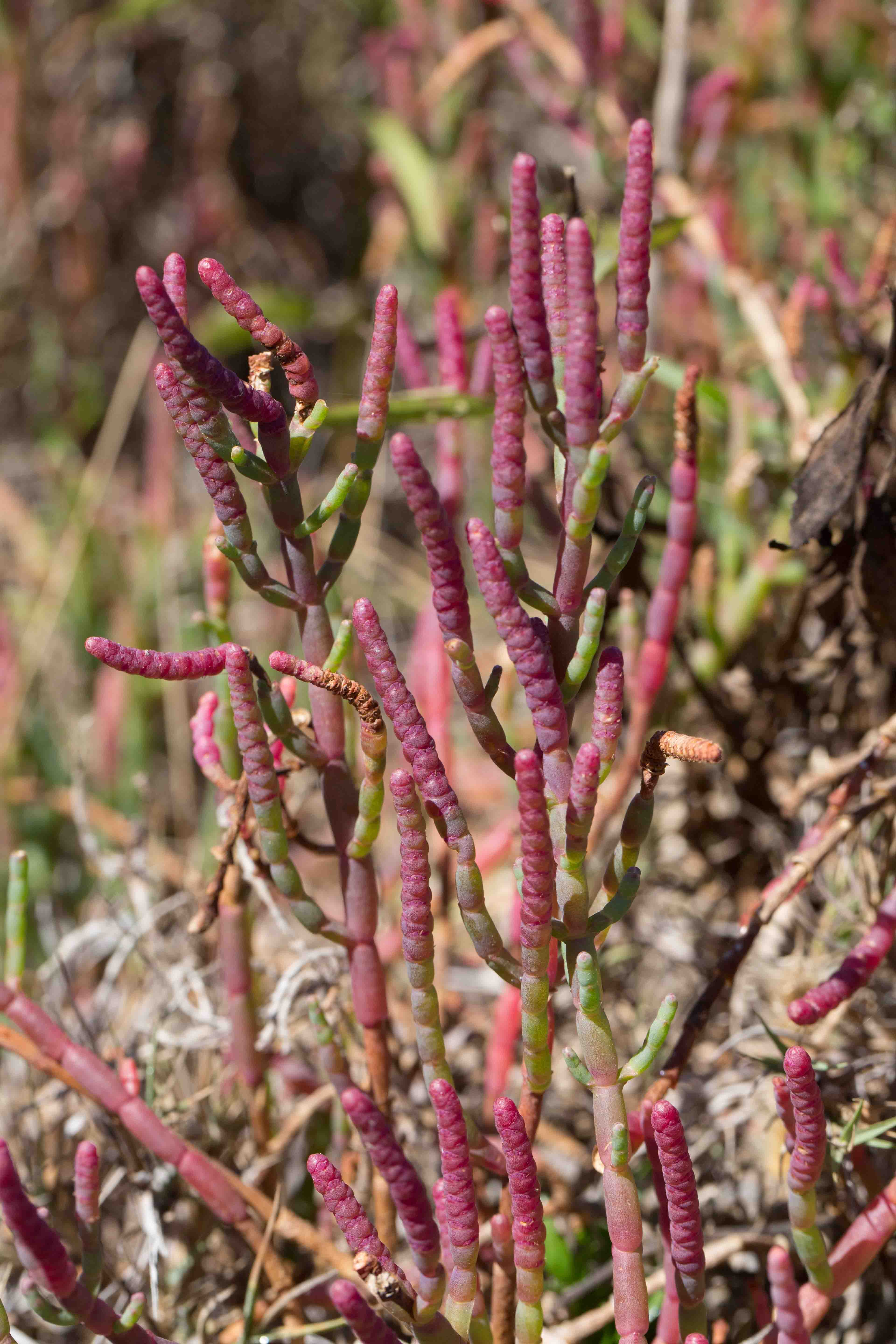
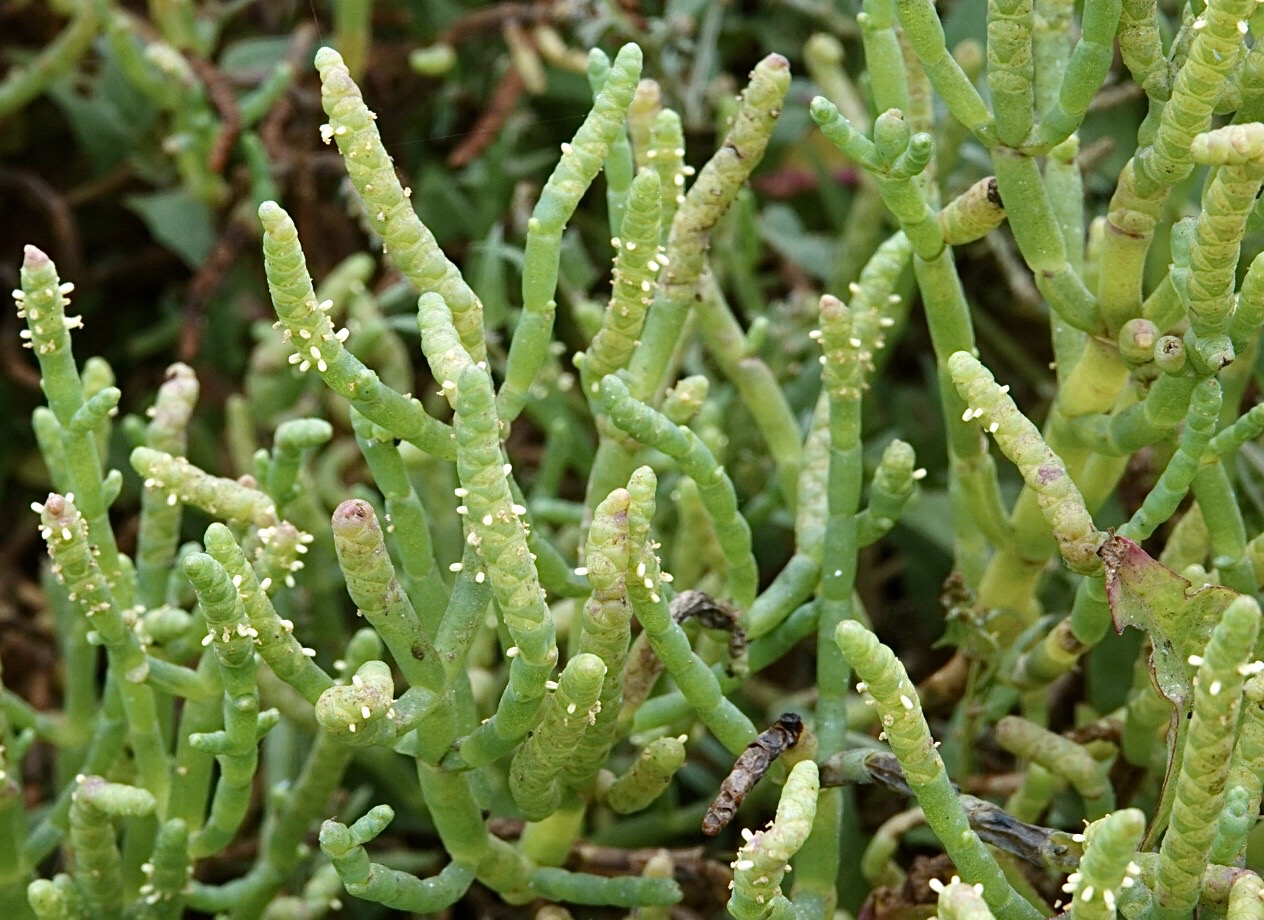
Pickleweed – Salicornia pacifica
Blooms:
July–Nov
Plant Height:
10–70 cm
Flower Size:
Very small
Origin:
Native
Habitat:
Alkaline flats, salt marshes
Notes:
This is found in profusion in salt marshes, and often turns reddish in the autumn. It is halophytic, i.e. it can tolerate high levels of salinity. It is a decumbent, perennial subshrub, with erect, fleshy, jointed branches, joints being 5–20 mm long. The tiny yellow flowers (just visible in the photos) comprise 3 fleshy tepals, 1–2 stamens and 2 stigmas. Photos #3 and 4 by CJH.